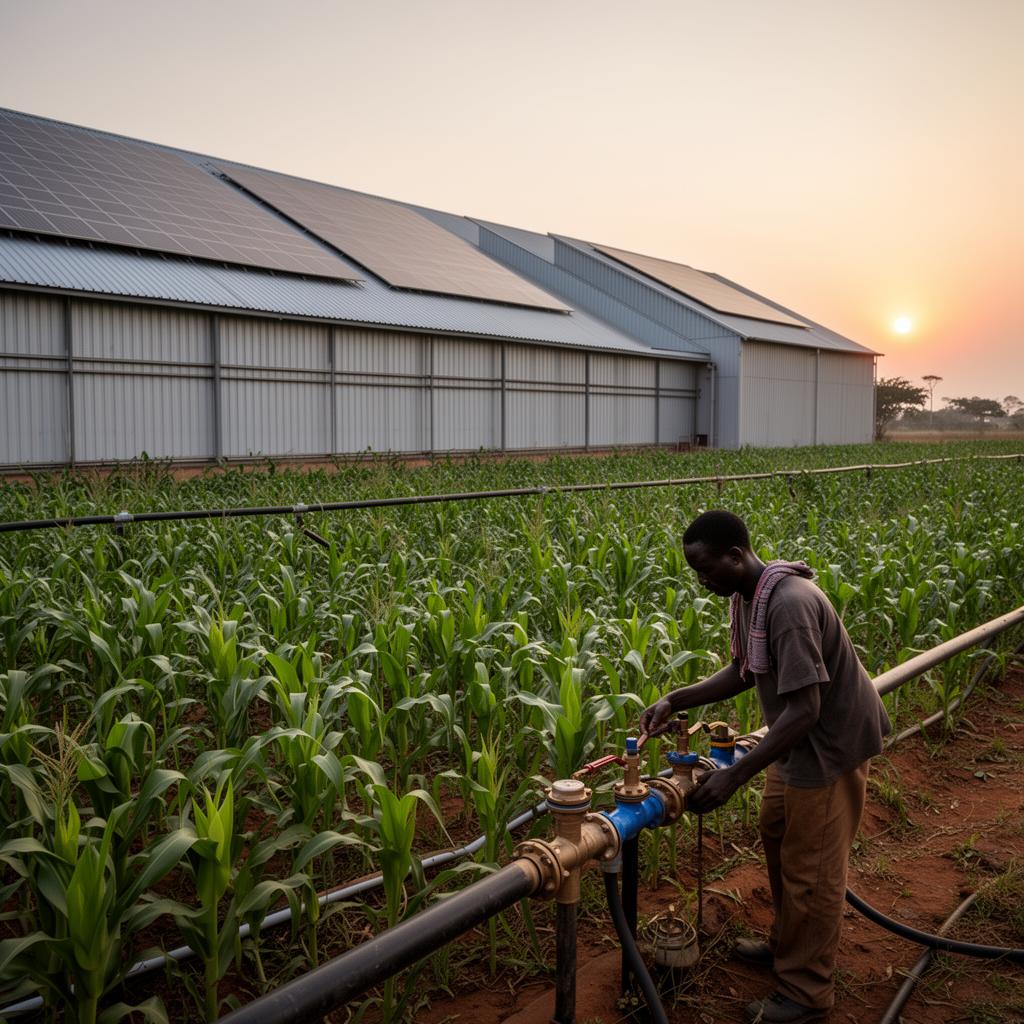
A proposed public–private partnership for agricultural logistics infrastructure
CIAF–DRC Agricultural Corridor Development Programme
CIAF Holdings is developing a proposed programme to establish a scalable network of agricultural collection, storage, processing, logistics and market-access infrastructure across strategically selected production and transport corridors in the Democratic Republic of the Congo.
01 · The concept
Connecting production zones to international markets
The programme is intended to be developed in phases according to production volumes, commodity flows, market demand, infrastructure feasibility, investment capacity and strategic priorities.
02 · Proposed PPP model
The core partnership model
Government
Provides the appropriate public framework, institutional coordination and applicable public-side support.
CIAF Holdings
Develops, mobilizes capital for, constructs and operates infrastructure, subject to the agreed PPP structure.
CDI Cooperative
Organizes producers and supports structured agricultural production and aggregation.
CIAF Academy
Develops the human capital required to operate the ecosystem.
CIAF Digital
Supports coordination, data, traceability and operational visibility.
International markets
Connect buyers, distributors and commercial partners with organized African supply.
03 · Network strategy
Building a National Agricultural Logistics Network
The proposed CIAF–DRC Agricultural Corridor Development Programme is designed around a long-term vision: connecting productive agricultural regions to organized collection, storage, processing, logistics and market-access infrastructure. The programme is envisioned as a phased network rather than a single construction project. One facility creates capacity; a network creates an economic system.
- Farmers
- Local collection centres
- District agricultural hubs
- Regional integrated hubs
- Processing & value addition
- Logistics corridors
- Ports / border gateways
- International markets
A scalable national network potentially comprising a large number of facilities over multiple phases, with the final number determined by production volumes, commodity flows, market demand, logistics economics, site feasibility, investment capacity and government priorities.
04 · Hub deployment logic
Build Where Production Meets Logistics
Facility locations are to be evaluated against a consistent set of criteria. No locations or facility counts have been fixed; each site remains subject to assessment and approval.
- Agricultural production density
- Commodity volumes
- Road access
- Port access
- Border access
- Existing logistics infrastructure
- Market proximity
- Processing potential
- Land availability
- Utilities
- Security
- Environmental considerations
- Community impact
- Commercial viability
05 · Corridor development model
The proposed corridor strategy
- 1
Production zone
Identify major agricultural production areas.
- 2
Collection network
Develop local collection points.
- 3
Regional hub
Aggregate, store and process significant volumes.
- 4
Transport corridor
Move products efficiently toward markets.
- 5
Port / border
Connect to domestic, regional or international trade routes.
- 6
International market
Connect organized supply with buyers.
06 · Facility models
Four standardized facility types
Regional Integrated Agricultural Hub
A large, integrated facility serving a major production and logistics catchment. The 5-hectare facility is the reference model for this category.
- Collection, weighing & quality control
- Dry, bulk & cold storage
- Processing, packaging & value addition
- Container handling & logistics
- Training, laboratory & utilities
District Agricultural Hub
A smaller facility designed to serve a district-level production area.
- Collection, weighing & grading
- Dry storage
- Basic processing
- Temporary holding & dispatch
- Farmer services
Agricultural Collection Centre
A local facility positioned close to production communities.
- Farmer registration
- Product collection & weighing
- Initial quality checks & grading
- Temporary storage
- Dispatch
Specialized Commodity Hub
A facility designed around a specific commodity or value chain — configuration determined by production characteristics, market demand and technical feasibility.
- Cacao, coffee & chili
- Sugar & grains
- Cassava
- Fruits & vegetables
- Other viable commodities
07 · Flagship 5-hectare facility
CIAF National Reference Agricultural Hub
A scalable reference model for integrated agricultural infrastructure
The first flagship facility is envisioned as a reference hub demonstrating how agricultural production, storage, processing, logistics, training and market access can operate within an integrated infrastructure environment. The reference facility can subsequently be adapted to different commodities, production regions and market requirements.
Planned — not yet constructed
The first 5-hectare facility is intended to demonstrate the model. It is not intended to represent the entire national network.
Its role is to validate infrastructure, operations, producer organization, processing, logistics, market access, training, digital coordination and commercial assumptions.
Conceptual reference programme (approx. 5 hectares)
- Administration
- Security
- Receiving
- Weighing
- Quality control
- Dry storage
- Bulk storage
- Cold storage
- Processing
- Sorting
- Grading
- Packaging
- Value addition
- Container loading
- Truck parking
- Logistics
- Maintenance
- Water infrastructure
- Waste management
- Quality laboratory
- Training
- Staff facilities
- Energy systems
- Digital operations
08 · Facility standardization
Replicate, Don't Reinvent
The long-term objective is to establish standardized development packages that can be adapted to different regions and commodities. This approach is intended to reduce unnecessary duplication and accelerate the development of future facilities.
Standardization may cover
- Architectural concepts
- Engineering
- Equipment
- Procurement
- Construction
- Operating procedures
- Quality systems
- Security
- Digital systems
- Training
- Maintenance
09 · Phased rollout
Phased development model
- 01
Phase 1 — Reference
Build and operationalize the first reference facility. Develop the first reference facility: validate the operating model and commercial assumptions, establish SOPs, develop the producer network and market relationships, train personnel and validate digital systems.
- 02
Phase 2 — Corridor
Replicate the model along a selected strategic corridor using standardized designs, engineering packages and operating procedures.
- 03
Phase 3 — Multi-corridor
Expand into additional production and logistics corridors, connecting facilities into integrated regional networks.
- 04
Phase 4 — National network
Develop a connected national network where commercially and technically viable, according to production volumes, market demand, commodity flows, infrastructure feasibility, investment capacity, utilization, government priorities and commercial performance.
10 · Strategic corridors
Building along the routes that connect production to markets
CIAF intends to prioritize locations where agricultural production, transport infrastructure, market demand and logistics economics create the strongest opportunity for productive infrastructure.
The proposed network may include strategic corridors connecting production zones with major domestic markets, ports, border crossings and international trade gateways. The proposed corridor strategy may include routes connecting major agricultural production zones toward strategic gateways such as the Banana Port corridor, subject to government planning, technical feasibility, infrastructure conditions and commercial viability.
11 · Market-back production
From market demand back to the farm
- 1Market — Identify buyer requirements and market opportunities.
- 2Specifications — Determine quality, volume, packaging, traceability and delivery requirements.
- 3Producers — CDI organizes producers around the opportunity.
- 4Production — Farmers produce according to defined commercial requirements.
- 5Aggregation — CIAF infrastructure receives and consolidates production.
- 6Processing — Products are cleaned, graded, processed and packaged.
- 7Logistics — Products move through the infrastructure network.
- 8Market — Products reach identified buyers and markets.
12 · PPP structure
A Proposed Public–Private Partnership Framework
CIAF intends to explore the development of the programme through an appropriate Public–Private Partnership framework with the Government of the Democratic Republic of the Congo. The proposed structure may combine:
Public sector
- Policy framework
- Institutional coordination
- Applicable public infrastructure interfaces
- Facilitation
- Approvals
- Other agreed public-side commitments
Private sector
- Capital mobilization
- Project development
- Design
- Construction
- Equipment
- Operations
- Maintenance
- Commercial management
The precise allocation of responsibilities would be determined through feasibility studies, negotiations, applicable law and formal agreements.
The commercial concept may incorporate a Build–Operate structure within an appropriate PPP or concession framework, subject to legal, financial, technical and institutional due diligence.
13 · Revenue model
Potential Commercial Revenue Streams
Depending on the facility and final project structure, potential revenue sources may include the following. No projected returns are published; financial projections would only follow formal modelling.
14 · Investment opportunity
An Infrastructure Opportunity With Multiple Value Layers
The proposed programme can potentially create opportunities across:
15 · Project development engine
A Development Engine for Agricultural Infrastructure
CIAF intends to develop the internal capabilities required to move projects through each stage:
Potential capabilities
- Feasibility
- Project development
- Engineering coordination
- Procurement
- Construction management
- Equipment
- Operations
- Maintenance
- Commercial development
- Partnerships
16 · International commerce
From African production to international markets
CIAF's international commerce strategy is designed to connect organized African production with commercially viable international opportunities. China may represent one important market opportunity where product demand, regulatory requirements, logistics and commercial relationships support viable trade.
- Buyer development
- Importer & distributor relationships
- Trade representation
- Export coordination
- Product compliance & quality assurance
- Traceability
- International logistics & warehousing
17 · Development impact
Building more than infrastructure
The programme is intended to support:
Agricultural development
More organized and market-oriented production.
Producer development
Stronger farmer and cooperative participation.
Food systems
Improved storage, processing and distribution capacity.
Value addition
More processing and transformation within African value chains.
Employment
Opportunities across construction, agriculture, processing, logistics, trade and professional services.
Skills
Training and professional development through CIAF Academy.
Trade
Improved connections between African producers and larger markets.
Infrastructure
Long-term productive assets that support economic activity.
Build the corridor with us
We welcome conversations with government institutions, investors, financial institutions, development partners, engineering firms and international buyers.